

A leading domestic rubber-plastics manufacturer boasts the following credentials: Holding over 70% market share in rubber hoses for the braking systems of China Railway Fuxing and Hexie EMUs; its products are deployed on both train series. Owning a 50% market share in automotive brake hoses, equipping one out of every two vehicles in China with its fluid-transfer lines. The sole domestically-independent supplier of high-speed-train rubber hoses in China, having led and participated in drafting dozens of national and industrial standards. A national “Little Giant” special-specialised-new enterprise, national green-factory awardee, and demonstration participant under the National Industrial-Foundation Project. Rising order volumes drove production capacity higher, yet bottlenecks emerged in the finished-goods warehouse.
Rubber hoses, sealing and damping components are stored on full pallets, characterised by abundant SKUs, large batch sizes and volatile inbound-outbound throughput.
Physical warehouse expansion was prohibited, and racking height had already reached the building limit.
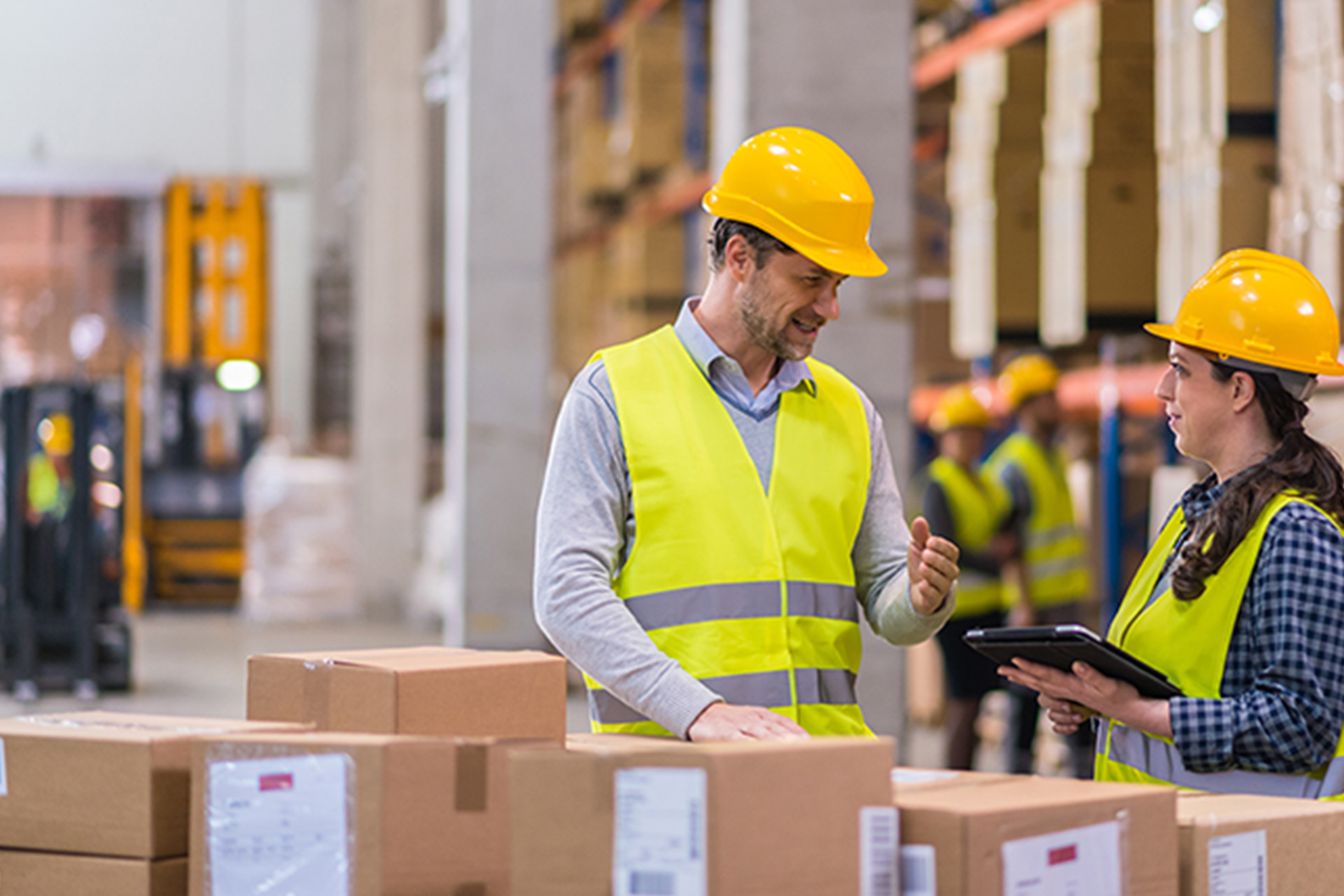
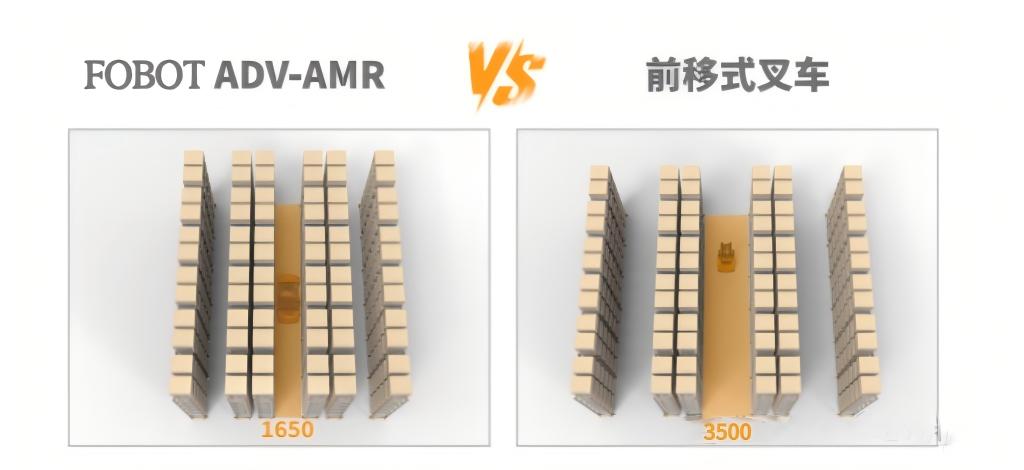
Five reach-truck forklifts operated day-to-day within 3.2-metre-wide aisles for turning and pallet handling — nearly half of the warehouse floor area was occupied solely by manoeuvring channels. This pain point is far from unique. Manufacturers in rubber-plastics, automotive components and rail-transport supply chains handle heavy, high-volume goods with stringent storage requirements. Traditional warehouse layouts exacerbate space waste driven by forklift turning radii. The core issue is often insufficient usable storage rather than insufficient building footprint.
Space: Aisles devour floor area; maximum ceiling height cannot yield additional storage slots The 3.2-metre aisle width represents the hard operational limit for conventional reach trucks, required for vehicle turning and pallet alignment. Given fixed warehouse dimensions and 5-metre rack heights, numerous wide aisles fragment available storage space.
Business volumes keep growing, yet the number of storage locations cannot expand. Efficiency: Five forklifts with five operators still fall short during peak periods Full-pallet inbound and outbound workflows for finished rubber goods involve multiple forklift movements and time-consuming turning cycles. Operations remain manageable on day shifts, yet five fully-utilised forklifts struggle to satisfy throughput during night shifts and order surges.
Compounding the challenge is labour: forklift operators are hard to recruit and exhibit high turnover. Labour shortages directly threaten shipment timelines, which are critical for serving high-expectation customers including high-speed-train and automotive OEMs. Human-forklift mixed operations within narrow aisles create limited-visibility collision risks for rubber-plastics pallets. Safety incidents or pallet damage harm operational efficiency and risk breaking delivery commitments to key clients. Warehouse Retrofit: Green-field high-bay warehouses are capital-intensive and time-prohibitive Constructing new facilities or installing heavy-duty automated racking demands civil-engineering investment and prolonged site-wide shutdowns, disrupting ongoing production.
For an enterprise operating amid rising order intake, time and opportunity costs outweigh pure hardware expenditure. The core challenge is clear: how to reclaim wasted space without adding building footprint and without modifying existing rack structures.
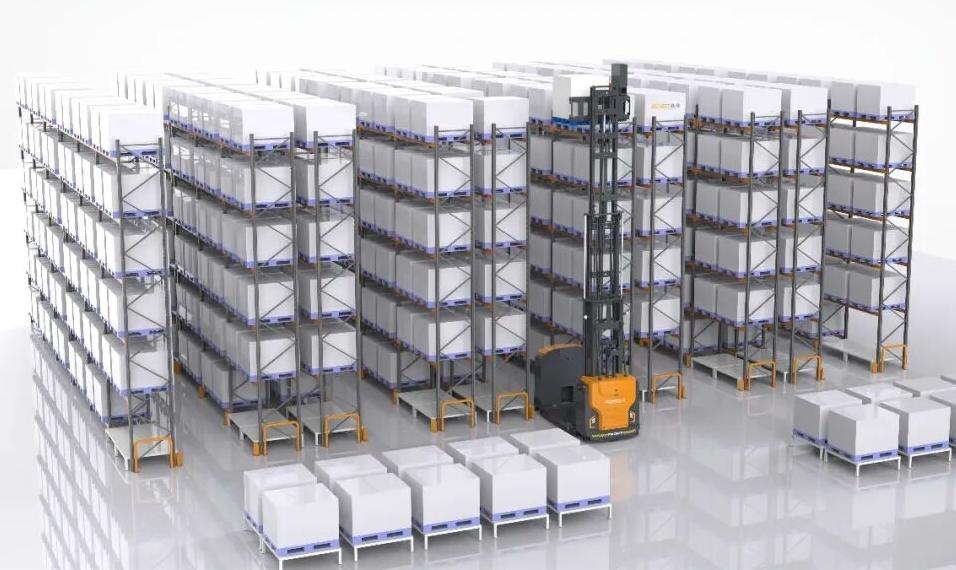
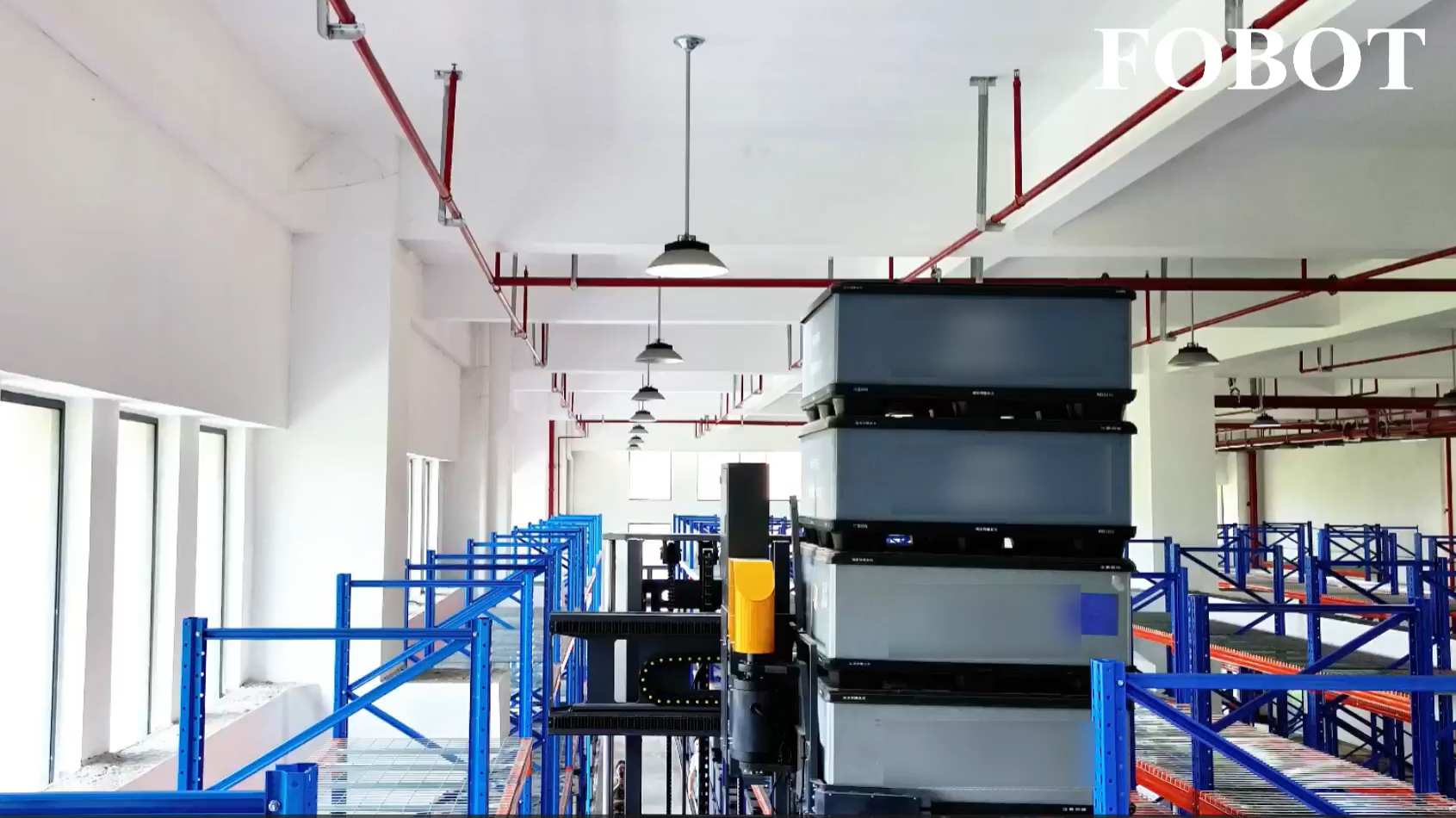
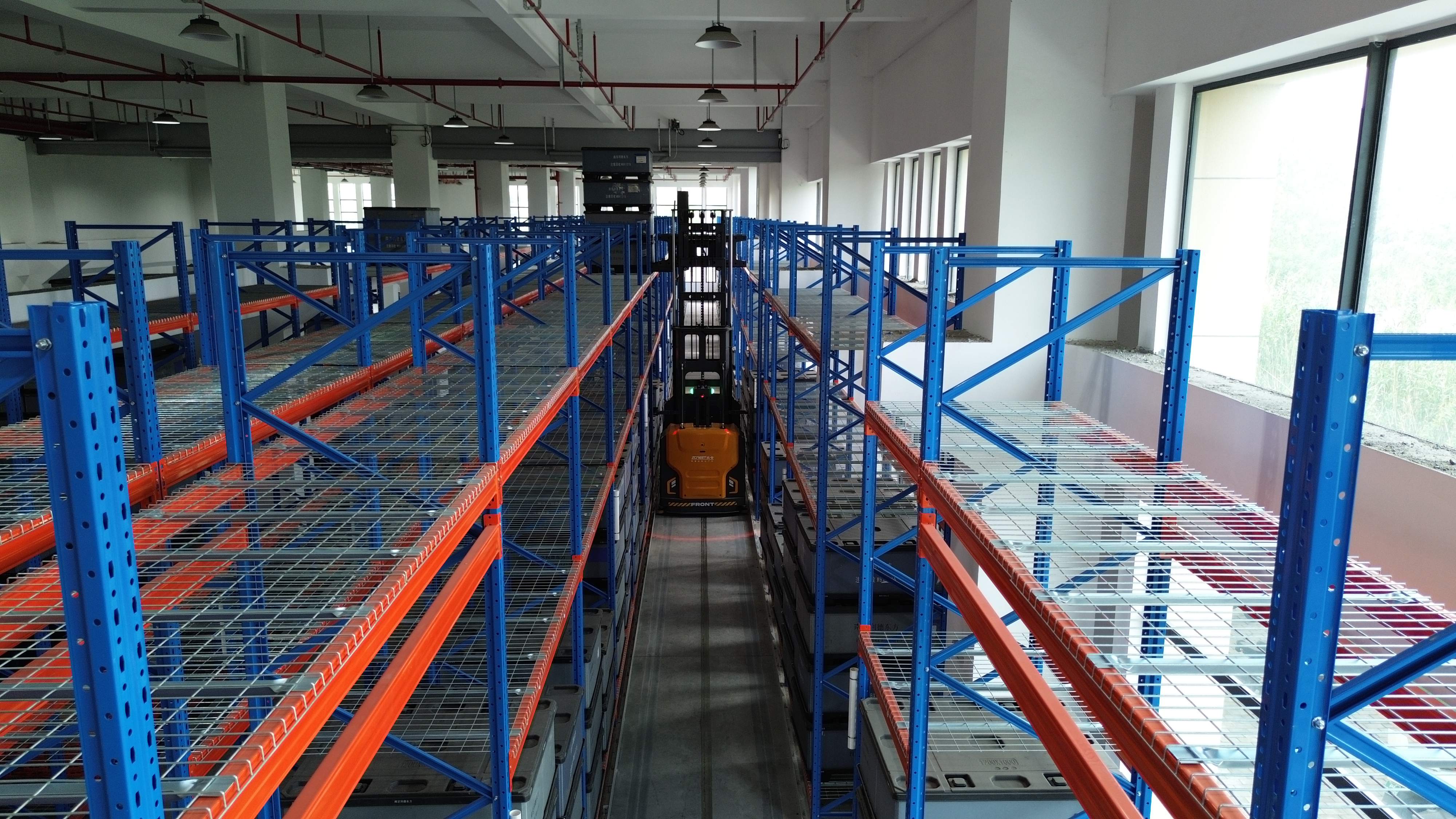
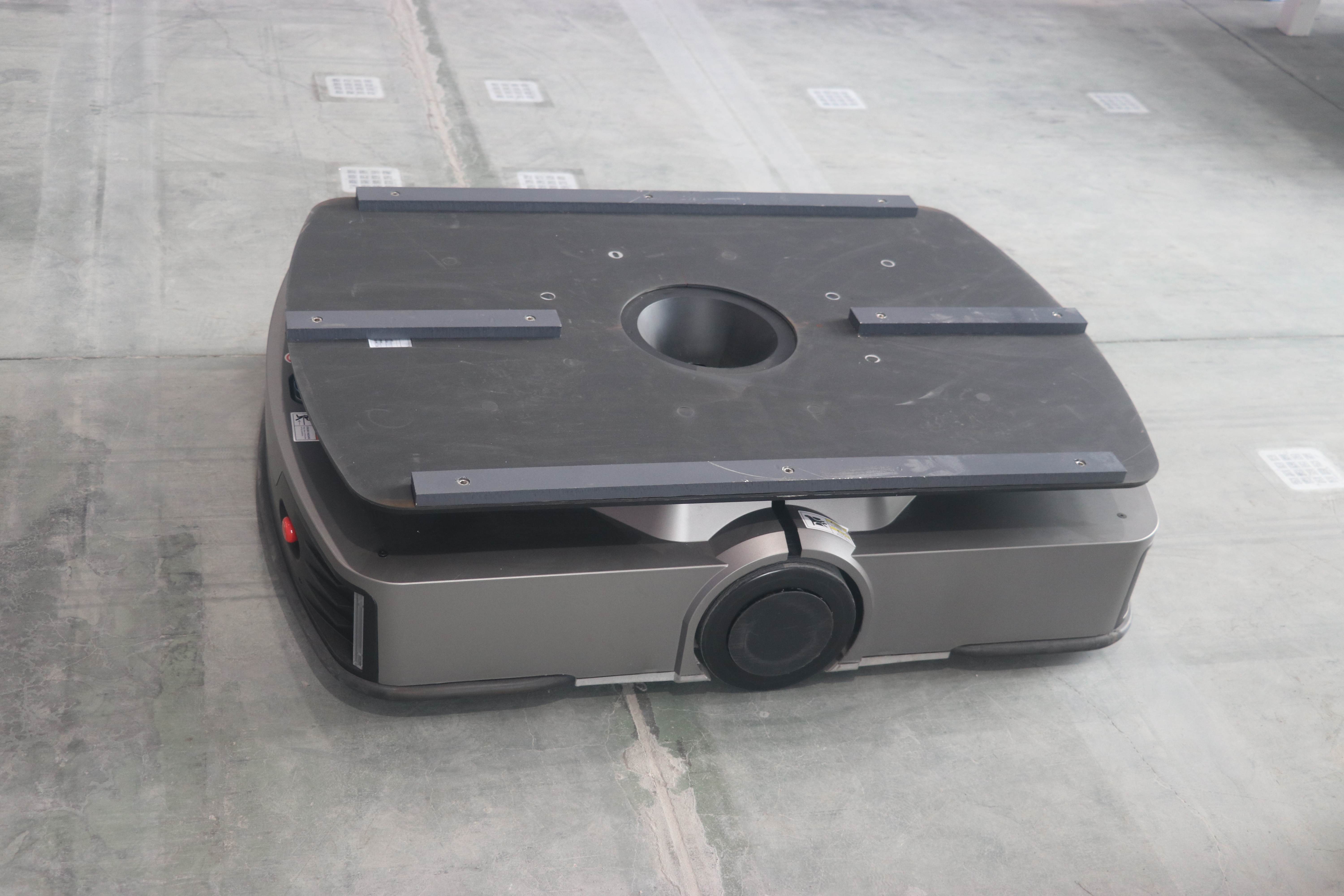
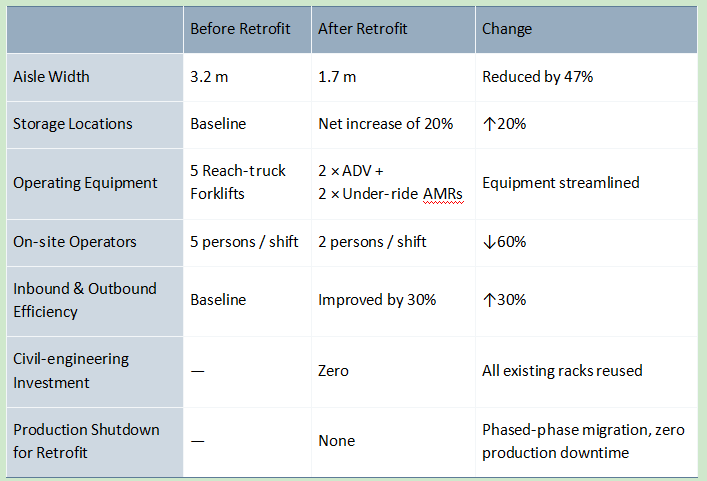
FOBOT Robotics delivers the solution: the ADV Omni-Directional Narrow-Aisle AMR. Rather than incremental tweaks to legacy workflows, it fundamentally redefines material-handling logic. The vehicle moves laterally into aisles without body rotation, eliminating turning-radius requirements entirely. From 3.2 m to 1.7 m: Narrower aisles unlock production capacity Equipped with a dual-steer-wheel omni-directional drive module, the ADV executes lateral translation and omnidirectional in-place movement. Required aisle width drops directly from 3.2 m to 1.7 m. The robot navigates reliably with less than 15 centimetres of clearance on either side of pallets against racking. The recovered 1.5-metre aisle width multiplied across the full warehouse aisle length translates directly into 20% additional storage locations. No building alterations or rack replacements were performed, yet effective warehouse capacity grew materially. 5-metre high-bay millimetre-level positioning: Gentle handling for rubber products Rubber hoses and sealing components are susceptible to surface scratches and impacts, demanding careful pallet manipulation. Leveraging laser-based navigation, the ADV achieves millimetre-accurate high-bay placement up to 5 metres lift height, enabling stable pallet access and eliminating misalignment-related collisions common in manual operations. Single-unit throughput reaches 20+ pallets per hour, lifting overall inbound-outbound efficiency by 30%. ADV AMRs plus under-ride AMRs for collaborative workflows: Operators stay out of aisles while goods move autonomously The solution relies not on isolated single-robot operation but on coordinated teamwork between ADV narrow-aisle AMRs and under-ride AMRs: ADV unmanned forklifts: Dedicated to pallet storage and retrieval within high-bay rack aisles Under-ride AMRs: Responsible for ground-level pallet transfer between staging zones, production lines and loading docks Two ADV units and two under-ride AMRs fully replaced the prior workload of five manned forklifts and five human operators. A unified dispatching system coordinates robot fleets and interfaces with the customer’s WMS, enabling batch management and traceability for multi-SKU high-volume pallet workflows.
Complete product-lot traceability is indispensable for suppliers serving high-speed-train and automotive OEM customers. Non-stop-production deployment: Phased commissioning on existing warehouse infrastructure All original racking structures are reused with no large-scale civil works. The system is deployed zone-by-zone, switching workflows incrementally while regular warehouse operations continue. End-to-end implementation including site survey, solution design, equipment delivery and commissioning requires far less lead time than conventional automated high-bay-warehouse retrofits.
Core value summary: No new construction, no production stoppages, no rack demolition — driving incremental capacity within existing warehouse assets.
Closing Remarks: Warehouse-upgrade Answers for the Stock-Asset Era Numerous manufacturing enterprises face identical constraints: insufficient warehouse capacity, limited land availability, constrained capital budgets and zero tolerance for production downtime. This real-world deployment validates an important insight: optimal warehouse modernisation does not always require ground-up reconstruction. Omni-directional mobility frees forklifts from mandatory turning cycles; 1.7-metre narrow aisles represent a new storage frontier; human operators and robotic equipment operate in segregated safe zones for high-efficiency workflows. Underexploited space inside existing warehouses represents substantial untapped capacity. FOBOT Robotics is the category-defining developer of omni-directional narrow-aisle unmanned forklifts, with proven deployments at leading customers across rubber-plastics, automotive-component and rail-transport industries. Our flexible-retrofit approach delivers value from every square metre of warehouse space without new-build projects or production interruptions.
If your warehouse also suffers from insufficient capacity, prohibitive retrofit costs and tight project timelines, please leave a comment or send a private message to book a free warehouse-space assessment. Our solution team will evaluate potential aisle-narrowing opportunities on-site.